 Rocket Safari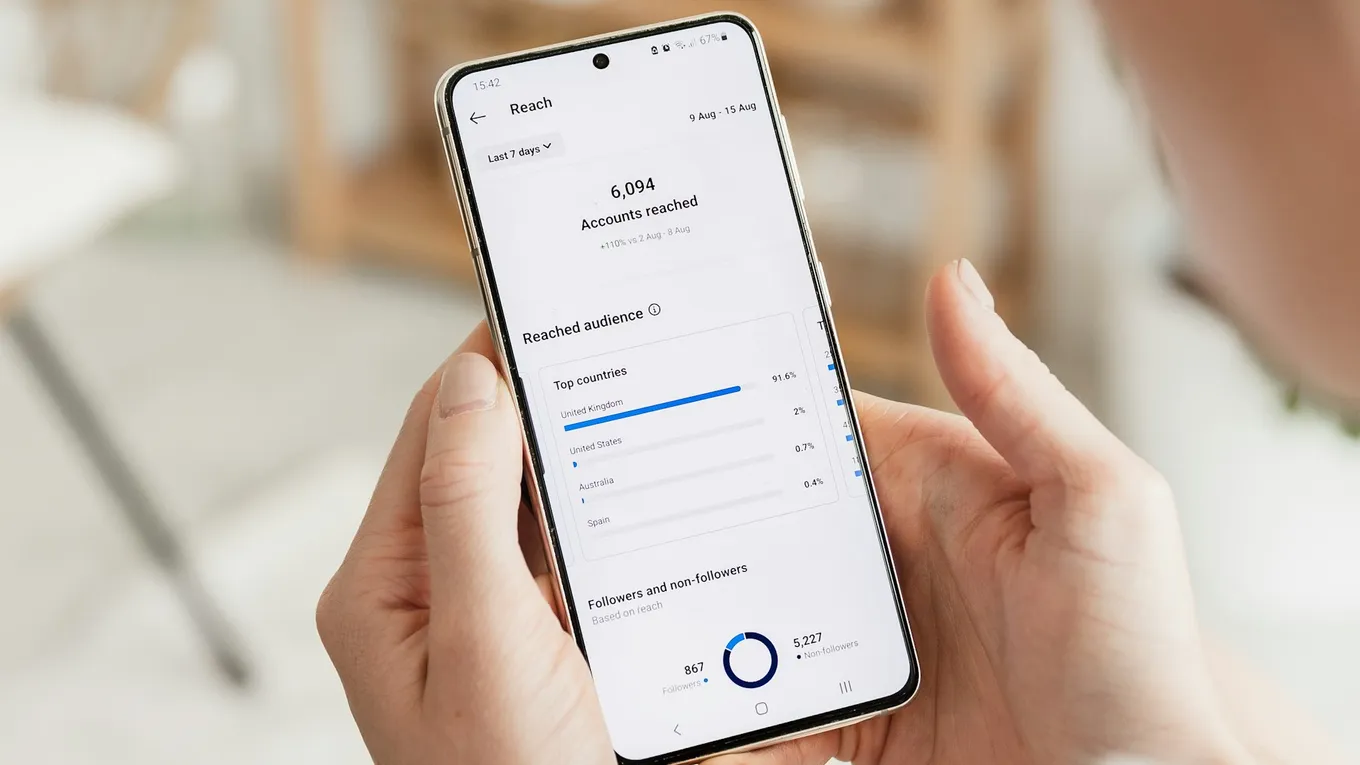
The Psychology of Instagram: Why We Love Sharing and Scrolling
Instagram is where we share our daily lives, connect with strangers and scroll past several hundred photos before breakfast. None of that is an accident, and none of it is really about the photos.
Have you ever wondered why posting a good shot feels so satisfying? Or why you reach the bottom of the feed, feel faintly empty, and immediately pull to refresh?
The answers sit in some fairly well-documented corners of psychology: how we bond, what our brains do with rewards, and why a number under a photo can hold so much sway. Below we walk through the four big levers (connection, visuals, validation and dopamine), and then, because this is a blog about actually growing on the platform, what each one means if you are the one making the content.
The Human Need for Connection
Humans are a social species, and belonging is not a nice-to-have. Psychologist Abraham Maslow placed “love and belonging” near the base of his hierarchy of needs, above only food and safety, and decades of research since have linked social connection to everything from mood to physical health. We are wired to want to be part of a group.
Instagram slots neatly into that wiring. It lets you keep loose tabs on hundreds of people you would never otherwise stay in touch with, which is exactly the kind of light, low-effort contact that still registers to the brain as connection. It is worth being honest that this is a partial substitute for the real thing rather than a replacement, but the pull is genuine: the app gives us a steady drip of “you are not alone” in a world where remote work and screens have made the offline version harder to come by.
The Power of Visuals
There is a reason Instagram led with images and only added text later. The brain processes visual information remarkably fast, and we are drawn to faces, colour and movement before we have consciously decided to look. A scrolling wall of photos is, in effect, a slot machine built for the visual cortex.
This is also why the platform leans so hard on filters, editing tools and, more recently, short-form video. Each new format is another way to make the stream more vivid and harder to look away from. Reels exist in large part because moving images hold attention longer than still ones, which is the whole game for a platform that earns its keep from time spent in-app.
So “post nice photos” is not vanity advice. It is working with the grain of how people actually consume the feed.
The Desire for Validation
We do not just want connection, we want to know where we stand. Social comparison theory, set out by psychologist Leon Festinger in the 1950s, describes how people gauge their own worth by measuring themselves against others. Instagram turns that quiet instinct into a public scoreboard: likes, comments, follower counts, all sitting there in plain numbers.
That scoreboard cuts both ways. Posting in the hope of a warm response is a perfectly normal motivator, and a good one. But the same mechanics feed the fear of missing out, the nagging sense that everyone else is having a better, busier, more-liked time than you are. Both the buzz and the anxiety come from the same place: a need to be seen and approved of that long predates the app.
The Dopamine Hit
Here is the part people get slightly wrong. Dopamine is less the chemical of pleasure and more the chemical of anticipation: it spikes when a reward might be coming, not only when it arrives. And the strongest trigger of all is unpredictability.
Psychologist B. F. Skinner showed this decades ago with what is known as a variable-ratio reward schedule. Animals given a treat at random, unpredictable intervals pressed the lever far more compulsively than those rewarded every time. It is the same logic that makes slot machines so sticky, and it is baked into your feed. You never know whether the next pull-to-refresh brings a flood of likes, a single comment, or nothing at all, and that uncertainty is precisely what keeps your thumb moving.
Worth keeping in perspective: none of this makes Instagram uniquely sinister, and “addiction” gets thrown around loosely. But the loop is real, it is deliberate, and it is the same loop you are tapping into every time someone engages with your work. If the feed sometimes leaves you flat, scheduling your posting and stepping away between sessions is a sane response, for you and your audience both.
What This Means If You’re the One Posting
Understanding the why is interesting on its own. It is more useful when you turn it into how. Every lever above is also a lever you can pull as a creator:
- Connection: people follow people, not logos. Reply to comments, show your face, and treat the account like a conversation rather than a broadcast. That is the bulk of improving your Instagram engagement.
- Visuals: lead with the strongest image or the most arresting first second of video, because that is what stops the scroll. The platform rewards content that holds attention, which is the core of using Instagram’s algorithm to your advantage.
- Validation and dopamine: the same anticipation that keeps you refreshing is what makes a good hook work. A caption that opens a loop (“I almost deleted this account last year, here’s why I didn’t”) earns the comment far better than a flat description. Our caption starters to hook your audience are built on exactly that.
- The scoreboard: treat your own numbers as feedback, not a verdict. Reading your Instagram analytics tells you what your audience actually responds to, which is far more useful than whether a single post did well.
The psychology of Instagram is not a trick played on you so much as a set of human tendencies the app is very good at meeting. Knowing how the levers work makes you a calmer user and, handily, a sharper creator. Use that knowledge to make things worth engaging with, and keep your own self-worth well clear of the like count.