 Rocket Safari
Are Instagram Giveaways Worth It? Why They Hurt Long-Term Growth
A giveaway is one of the few growth tactics that looks brilliant for about a week and then quietly costs you for months. The follower count rockets, the dopamine hits, and then the winner is announced and the whole thing deflates. If you are weighing up whether to join one (or pay to be listed in one), the short answer is: almost never. Here is the longer answer, and what actually works instead.
How giveaway-to-follower mechanics really work
The version most creators run into is the loop giveaway. A group of accounts (sometimes a handful, sometimes forty or more) pool money for a prize, usually cash or the latest phone. To enter, you have to follow every account in the loop, like a stack of posts, and tag a few friends. One entry, one big follow-everyone requirement.
That is the whole trick. People are not following you because they like your content. They are following you because following you is the toll they pay for a shot at a prize. The prize is the product. You are just a turnstile they walk through on the way to it.
Because the entry rules force a mass follow, the spike is real but the intent behind it is not. Every account in the loop gets the same bump, and every account in the loop inherits the same problem the moment the prize is handed over.
The followers a giveaway actually buys you
Here is who tends to land in your follower count after a giveaway:
- People who unfollow the instant the winner is announced
- People who forget why they followed and drift off a few weeks later
- People who already follow thousands of accounts and will essentially never see your posts
- Throwaway accounts set up purely to farm giveaways
- Bots
Notice what is missing from that list: anyone who came for you. A giveaway is very good at inflating a number and very bad at building an audience, which are not the same thing and never have been.
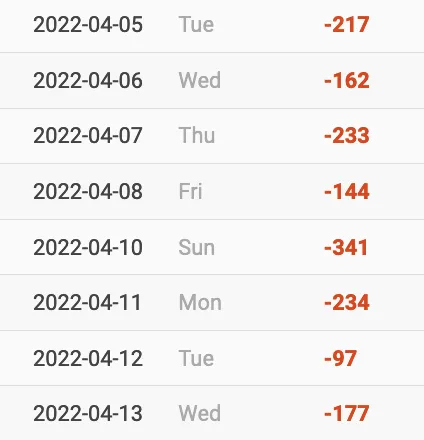
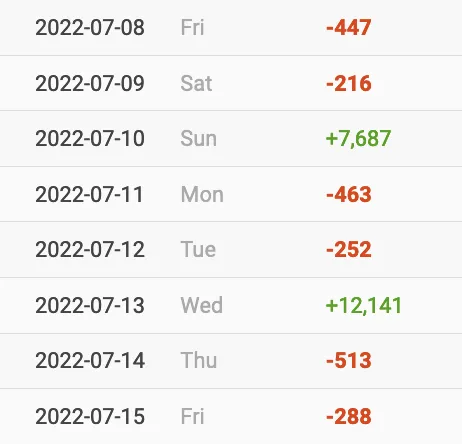
Chasing your own tail: trying to keep the follower count up as giveaway entrants bleed away once the prize is gone.
The trap is that the unfollows tempt you into another giveaway to patch the gap, then another, each one a little more expensive than the last. It is a treadmill, and getting off it later is far harder than never stepping on. People who have grown this way often spend longer undoing the damage than they ever spent building the spike.
How to spot a junk giveaway
Most of the giveaways pitched to creators are junk. A few tells, none of which require much detective work:
- A follow-everyone requirement. If entering means following ten, twenty, or forty unrelated accounts, the prize is doing all the work and none of those follows mean anything.
- An off-brand prize. A generic iPhone or a pile of cash attracts people who want an iPhone or cash. It tells you nothing about whether they care about cooking, fitness, photography, or whatever you actually post.
- A pay-to-be-listed offer. If someone is charging you to appear as an entry requirement, you are buying a follower spike, which is a polite cousin of buying followers outright.
- A wildly mismatched audience. If the other accounts in the loop have nothing to do with your niche, their entrants have nothing to do with your niche either.
If a giveaway ticks those boxes, it will hand you a number and take your engagement rate in exchange.
What this means for your engagement
The maths is unforgiving. Followers who turned up for a prize are not interested in your content, so they do not like, comment, save, or share. And the few real ones who stick around are often the chronic followers who already track thousands of accounts and will rarely have your posts surface in their feed.
So your follower count goes up while your engagement rate goes down, and engagement rate is the figure that actually matters. Reach on Instagram leans heavily on early engagement: if your first wave of viewers ignores a post, the algorithm reads that as a weak post and stops showing it. A bloated, indifferent audience can therefore make your reach worse, not better.
Ask yourself what the point is of 100,000 followers who behave like 1,000. It looks impressive in a screenshot and falls apart the moment a brand opens your analytics. The first thing a brand checks now is engagement rate, and a giveaway-padded account fails that check instantly. If your numbers have stalled in general, our guide to why you might not be growing on Instagram covers the usual culprits.
Further reading: Tribe: How a Giveaway Destroyed my Authentic Engagement, a creator’s first-hand account of the same trap.
The one time a giveaway can be fine
Giveaways are not evil in principle. They go wrong when they are bolted onto a mass-follow scheme. Run one for the right reasons and it can genuinely reward the audience you already have.
A giveaway is worth considering when all of these are true:
- You are giving to your own audience, not roping in strangers from a loop.
- The prize is on-brand: something your actual followers would want, so it attracts more of the right people rather than prize-hunters.
- There is no mass-follow requirement. Asking people to follow you, tag a friend, and comment is fine. Forcing them to follow forty unrelated accounts is not.
Done this way, a giveaway is a thank-you to the people who already care, and the new followers it pulls in tend to be friends-of-fans rather than bots. That is a completely different thing from a loop, even though they share a name.
How to measure the damage afterwards
If you have already run one, or you are tempted to, watch the numbers in the weeks that follow rather than the hour after it ends. A few things to track:
- Engagement rate. Take your average likes and comments, divide by your follower count, and compare it to before the giveaway. A drop here is the clearest sign the new followers are dead weight. Our guide to tracking your Instagram analytics walks through pulling these figures from Insights.
- Follower churn. Watch how fast the count falls back once the prize is gone. A steep drop in the first week is entrants cashing out.
- Reach per post. If your posts are reaching a smaller share of your (now larger) audience, the new followers are not seeing you, which is exactly the problem.
If the giveaway left you with bots and throwaway accounts, it is worth a clear-out. Here is why you should remove ghost followers and how a leaner, real audience reads better to both the algorithm and to brands.
What to do instead
The goal is to grow with as little bribery as possible, so the only real incentive to follow you is you. That is the audience that sticks around, engages, and converts.
The Mother Child growth method works on exactly that principle: your profile is shown to people likely to enjoy it, and they follow because they choose to, not because a prize made them. Pair that with the slow, unglamorous habits that actually compound, and you build a real audience instead of renting a fake one. If your engagement needs reviving in the meantime, start with our guide to improving your Instagram engagement.
Giveaways are one of the worst ways to grow on Instagram, not far off buying fake followers outright. Most entrants never know what they are signing up for, the higher-value ones leave the moment the prize is gone, and you can end up paying again and again just to stand still. Grow for the right reasons and you will not have to.